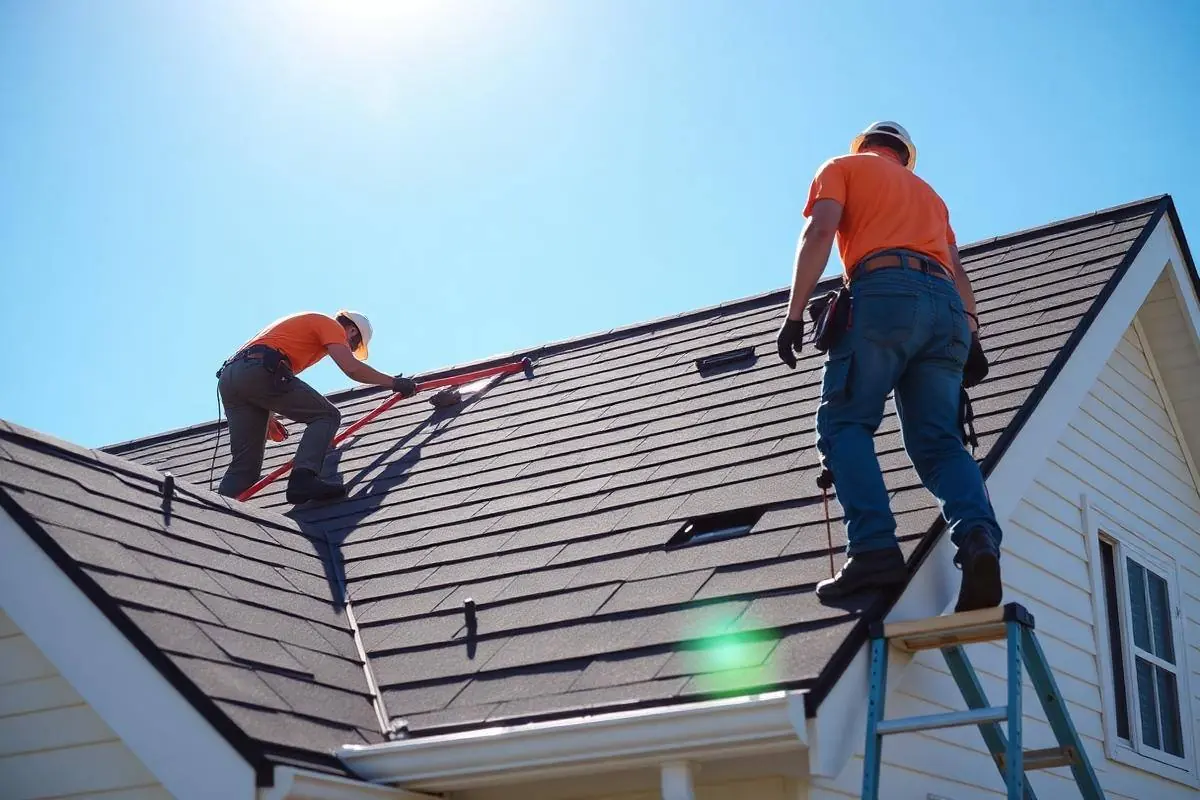
Real 2026 ranges for the Lowcountry, what actually drives the number on your estimate, and how to tell a complete quote from a cheap one.
Updated August 2026 8 min read
The short answer
Most Charleston-area homes land between $11,000 and $20,000 for a full architectural shingle replacement, and roughly $24,000 to $45,000 for standing seam metal. Charleston runs about 8–20% above national and statewide averages, and the reason is not markup — it's the high-wind attachment schedule, corrosion-rated flashing, and coastal labor demand that inland markets don't carry.
Typical Charleston-area replacement ranges (2026)
Scope
What it covers
Typical range
Architectural asphalt — simple roof
Single-story ranch, straightforward hips and gables, one layer tear-off, standard flashing replacement.
$11,000 – $15,000
Architectural asphalt — complex roof
Two stories, multiple valleys, dormers, chimney and roof-to-wall flashing, steeper pitch, harder access.
$15,000 – $22,000
Standing seam metal
Concealed-fastener panels, coastal-rated finish and clips. Materials have climbed with 2026 steel and aluminum tariffs.
$24,000 – $45,000+
Peninsula / historic district
Board of Architectural Review submittal, restricted material and profile, narrow street staging and limited dumpster placement.
Add 10 – 25%
Decking repair (discovered at tear-off)
Rotted sheathing under old leaks. Priced per sheet, and it should be a line item on the estimate — not a surprise.
$70 – $130 per sheet
These are Lowcountry market ranges compiled from public 2026 cost reporting, not a quote. Your number depends on roof area, pitch, layers, access, and what's under the old shingles. We measure before we price.
Why Charleston costs more than the national average
Charleston County sits in a high-wind design zone, and the code follows. A compliant roof here needs a heavier fastener schedule, wind-rated starter and ridge, sealed deck or upgraded underlayment, and flashing that won't corrode in salt air. Every one of those requirements adds material and labor that a roof in Columbia or Greenville never has to carry.
On top of code, the market itself is tight. Storm seasons pull crews into the region and push them back out, and coastal labor demand stays elevated year-round. Public cost reporting puts Charleston roughly 8% above the national average and 10–20% above the South Carolina statewide average — and that gap is real, not a coastal upcharge.
Design wind speeds on the coast drive attachment and edge-metal requirements
Salt aerosol shortens the service life of standard-plated fasteners and flashing
Roughly 52 inches of annual rainfall versus a 38-inch national average
Humidity and shade grow algae on roofs that would stay clean inland
The five things that actually move your number
Homeowners routinely get three estimates that differ by $10,000 on the same house. Usually the spread isn't dishonesty — it's three different scopes wearing the same word, 'roof.' These are the variables that separate them.
Roof area, not house area. Overhangs and pitch typically make the roof 15–20% larger than the footprint. A 2,000 sq ft house often has a 2,300 sq ft roof.
Pitch and complexity. Valleys, dormers, chimneys, and skylights are where roofs leak and where labor concentrates. A steep, cut-up roof costs more per square than a simple one.
Tear-off and layers. Two layers means double the disposal and double the time. It also means nobody has seen the decking in decades.
Flashing. Replaced, or reused? Reused flashing is the single most common way a low bid gets low, and the most common source of a leak two years later.
Ventilation. Intake and exhaust need to be balanced. An unbalanced attic cooks shingles from underneath and shortens the roof you just paid for.
How to read a Charleston roofing estimate
A complete estimate tells you what's being installed, not just what it costs. If any of the following is missing, ask before you sign — the gap is where the price difference lives.
Named products: shingle line, underlayment type, ice-and-water or sealed-deck coverage, drip edge gauge
New flashing at every penetration, valley, chimney, and roof-to-wall termination — explicitly stated
A per-sheet decking replacement rate, agreed in writing before tear-off begins
Ventilation plan: what intake and exhaust will exist when the crew leaves
Permit pulled under the contractor's license, with inspection records at closeout
Both warranties, separately: the manufacturer's material warranty and the contractor's workmanship warranty, with the term stated in years
Current general liability and workers' compensation certificates, provided on request
Insurance, storms, and what you can actually claim
Storm damage claims are common here, and so is confusion about them. Wind and hail damage is typically covered; age-related wear and deferred maintenance is not. If a named storm has moved through, document the roof with dated photos before any tarping or repair happens.
South Carolina also runs the SC Safe Home program, which supports fortified roofing upgrades and can reduce premiums for qualifying coastal homes. If you're replacing anyway, it's worth asking whether a fortified-standard install pencils out over the life of the roof.
Asphalt or metal in a coastal environment
Architectural asphalt is the default for most Lowcountry homes, and a properly detailed asphalt roof performs well here. Metal earns its premium on high-exposure sites — marsh-front, ocean-facing, or anywhere sustained wind and salt aerosol hit a roof every day.
The honest tradeoff: metal roughly doubles the up-front cost and typically doubles the service life, so the math turns on how long you plan to hold the house. Where metal does not pay for itself is on a sheltered interior lot with a simple roofline. We'll tell you which one you have.
What we do differently
We treat the roof as part of one exterior system, not an isolated trade. Water that gets past a roof edge lands on siding, windows, and trim, so we scope the terminations — kick-out flashing, roof-to-wall, gutter sizing and discharge — as part of the roof, not as someone else's problem later.
Every estimate we write names products, states the decking rate before tear-off, and includes the permit under our license. If we find something at tear-off that changes the number, you see photos and the revised line item before we proceed.
Questions we get asked
Straight answers, no hedging.
How much does a new roof cost in Charleston, SC?+
Most Charleston homes fall between $11,000 and $20,000 for a complete architectural asphalt shingle replacement including tear-off, underlayment, new flashing, permits, and disposal. Standing seam metal generally runs $24,000 to $45,000 or more. Simple single-story roofs sit at the low end; two-story homes with complex rooflines sit at the high end.
Why are Charleston roofing quotes so different from each other?+
Almost always because the scopes differ. One bid replaces all flashing and another reuses it. One includes sealed-deck underlayment and another uses basic felt. One states a decking replacement rate up front and another leaves it open. Compare the named products and the flashing line before you compare totals.
How long does a roof replacement take?+
One to three days of installation for most homes, weather permitting. Complex or steep roofs and metal installs take longer. Permitting and material lead time happen before that, and on peninsula historic addresses or island design-review communities the approval step can add weeks — we tell you which track your address is on before we commit to a start date.
How long should a roof last in the Lowcountry?+
A well-installed architectural asphalt roof typically gives 20 to 25 years here, shorter than the same product inland because salt, UV, humidity, and algae all accelerate wear. Standing seam metal commonly runs 40 to 50 years. Ventilation and flashing quality affect that lifespan more than the shingle brand does.
Will insurance pay for my roof replacement?+
Sudden storm damage — wind, hail, impact — is generally covered. Wear from age is not. Document the roof with dated photos before any temporary repair, keep your claim number, and get an independent scope. We can meet an adjuster on site and walk the damage with them.
Do I need a permit to replace my roof in Charleston?+
Yes. Roof replacement is permitted work throughout the Charleston area, and historic-district addresses can additionally require Board of Architectural Review approval on material and profile. We pull permits under our own license and hand over inspection records at closeout.
Can you just go over the existing shingles?+
We don't recommend it on the coast, and we generally won't do it. Layering hides the decking, adds weight, traps heat, and makes proper flashing at terminations impossible. It saves money on day one and costs more the first time water finds a way in.
We measure the roof, document what we find, and write an estimate that names every product and states the decking rate before tear-off. No pressure, no placeholder pricing.
We walk the whole exterior — roof, walls, openings, drainage — and tell you what's failing, what's fine, and what it costs to fix. No pressure, no guesswork.