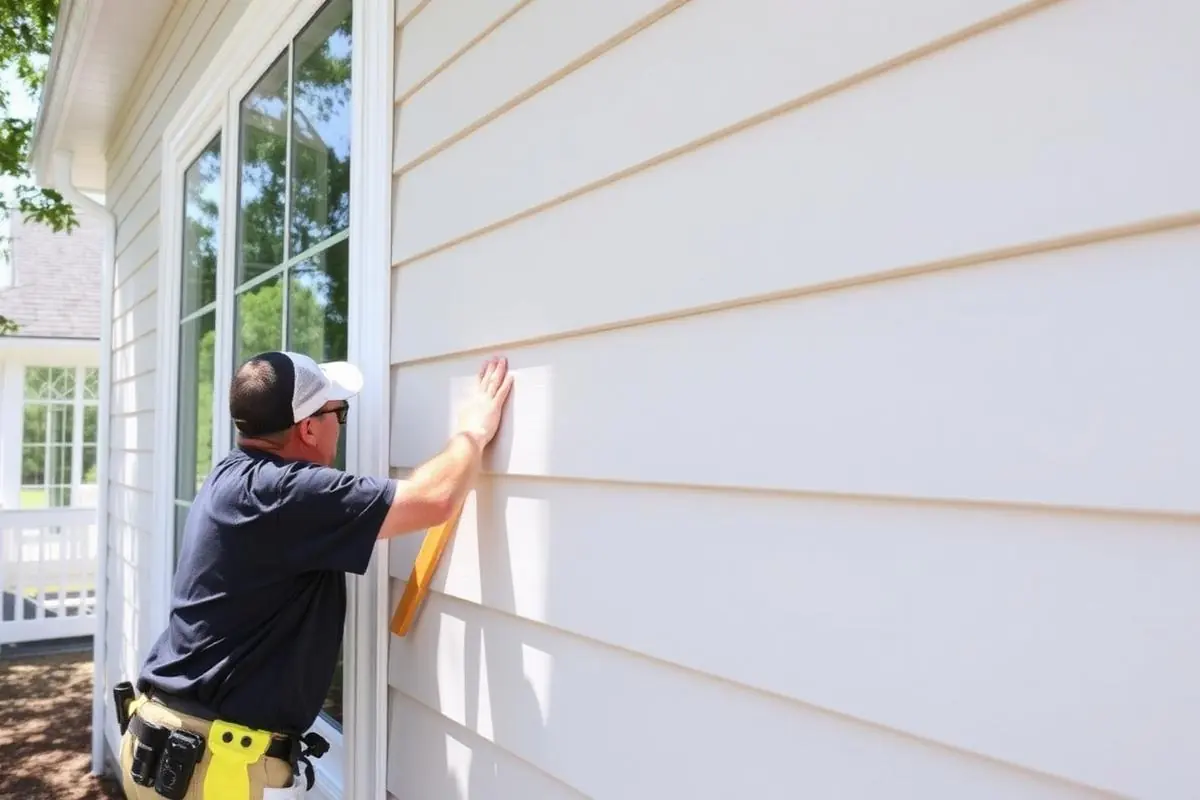
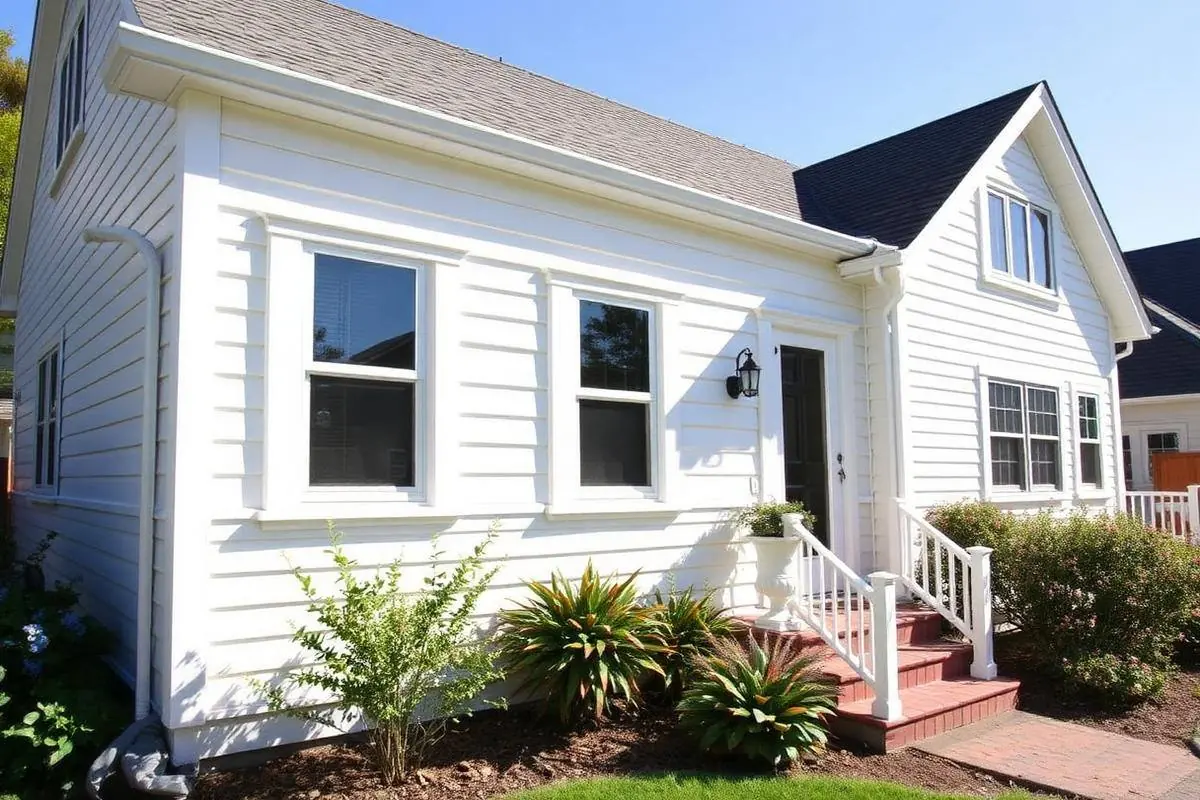
Not every tired wall needs a re-side. If the damage is localized and the rest of the cladding has life in it, repair is the right answer and we'll say so — even though replacement is the bigger job. What we won't do is patch over rot, because covering wet sheathing just moves the failure somewhere you can't see it.
Rot and soft-sheathing repair, including band joist and framing where needed
Storm and impact damage — board replacement and color matching
Kick-out and head flashing retrofit where terminations were never flashed
Grade clearance re-established so the bottom courses can dry
Caulk joint renewal and cut-edge priming on existing fiber cement
Written repair-versus-replace assessment with photos, not a sales pitch
By the Numbers
Typical siding repair scope and cost
Localized board replacement
$400 – $1,500 per area
Rot repair with sheathing replacement
$70 – $130 per sheet, plus labor
Framing / band joist repair
$800 – $3,500 depending on extent
Flashing retrofit at a termination
$350 – $1,200 per area
Full elevation replacement
Priced per sq ft — see the siding cost guide
Typical schedule
1 – 4 working days for most repairs
Repairs are scoped after we open the wall enough to see what's behind it. You get photos and a revised line item before we go further than the original scope — no surprise invoices.
Repair or replace: how we decide
The question is whether the damage is a local event or a symptom of the whole wall reaching the end of its life. A storm cracked three boards on an otherwise sound elevation — that's a repair. Chalking, cupping, and mildew returning across four elevations weeks after a proper wash — that's a wall telling you it's done.
We give you the assessment in writing with photos so you can see what we saw. If it's repairable, we say repair, and the estimate reflects the smaller job.
Repair: localized damage, sound cladding elsewhere, matching material available
Repair: a single failed termination causing a leak on an otherwise good wall
Replace: chalking, cupping, or mildew returning across whole elevations
Replace: rot at grade with soft framing, or paint failing in under five years
Replace: repeated repairs chasing the same water on the same elevation
Rot repair means finding the water first
Rotted siding is downstream of something. Mulch stacked against the wall, a gutter discharging at the foundation, a missing kick-out where a roof meets a wall, or a window installed without head flashing. Replace the boards without correcting the source and you'll be back in three years.
Because we work the entire exterior, we scope the source as part of the repair rather than handing it to another trade. That's usually a small item — rerouting a downspout, installing a kick-out, cutting grade back — and it's the difference between a fix and a delay.
Siding buried in mulch or soil with no clearance at grade
Gutter or downspout discharging against the wall
Missing kick-out flashing where a roof edge meets a wall
Windows and doors sealed with caulk instead of flashed with metal
Butt joints and corners opened up, letting wind-driven rain behind the cladding
Matching what's already on the house
Fiber cement matches well — profiles are standardized and a repaired area can be finished to blend. Painted wood and engineered wood match well too, since the whole area gets recoated.
Vinyl is the hard one. Color fades over a decade and can't be matched to a new panel, so a repair on an older vinyl wall will show. Sometimes the honest answer is replacing one full elevation rather than patching it, and we'll tell you that before we start rather than after you see the result.
Storm and impact damage
After a storm, document with dated photos before anything gets touched, and open the claim before repairs begin. Siding damage frequently accompanies roof damage from the same event and belongs on the same claim as a separate line item — carriers often miss it if nobody points it out.
We photograph the damage completely, write an honest scope, and meet your adjuster on site if that helps. We don't ask for an assignment of benefits and we'd advise against signing one.
Before & After
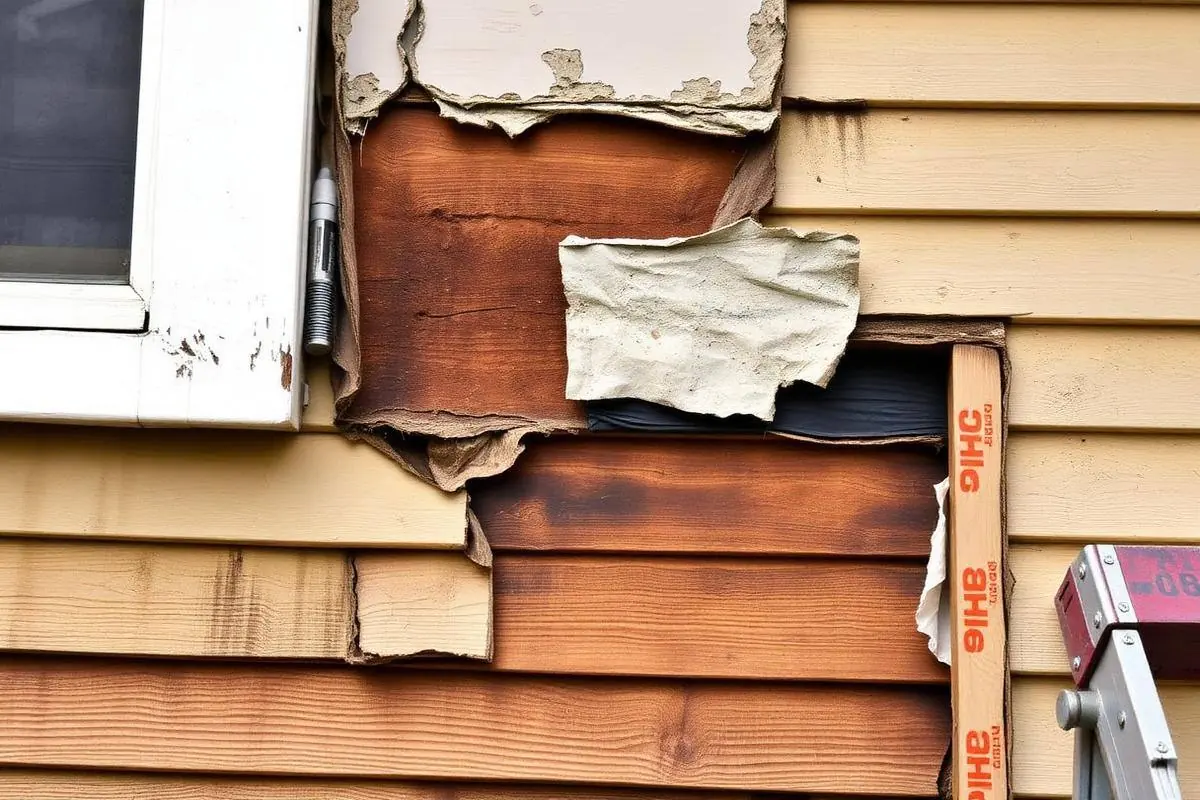
Rot at grade opened up, corrected, and closed back in
BeforeAfter
Before: rot and moisture damageAfter: repaired and detailed
Soft sheathing and framing replaced, the water source corrected rather than covered, grade clearance re-established at 6 inches, new boards installed with primed cut edges, and the termination flashed properly instead of caulked.
Localized board replacement usually runs $400 to $1,500 per area. Rot repair adds sheathing at $70 to $130 per sheet plus labor, and framing or band joist repair runs $800 to $3,500 depending on how far it spread.
Should I repair or replace my siding?+
Repair when the damage is localized, the rest of the cladding is sound, and matching material is available. Replace when chalking, cupping, or mildew appear across whole elevations, when rot has reached framing, or when repeated repairs keep chasing the same water.
Can you match my existing siding?+
Usually with fiber cement and painted wood, since profiles are standard and the area gets refinished. Faded vinyl is the difficult case — a decade-old panel can't be color matched, so replacing a full elevation sometimes reads better than patching it.
How do I know if I have rot behind my siding?+
Press the cladding — if it gives, or if trim yields under a screwdriver, there's moisture behind it. Other signals are paint failing at the bottom courses, siding sitting in mulch, staining below a roof-to-wall intersection, and insect activity along the base of the wall.
Will insurance cover siding damage?+
Sudden storm, hail, or impact damage is generally covered; rot from long-term moisture and deferred maintenance is not. Coastal policies often carry a separate named-storm deductible. Document with dated photos before any repair and open the claim first.
How long does a siding repair take?+
Most repairs are one to four working days. Rot repair that reaches framing takes longer because the structural work has to be right before anything goes back over it. We tell you the day we open the wall, not at the end.
We walk the whole exterior — roof, walls, openings, drainage — and tell you what's failing, what's fine, and what it costs to fix. No pressure, no guesswork.