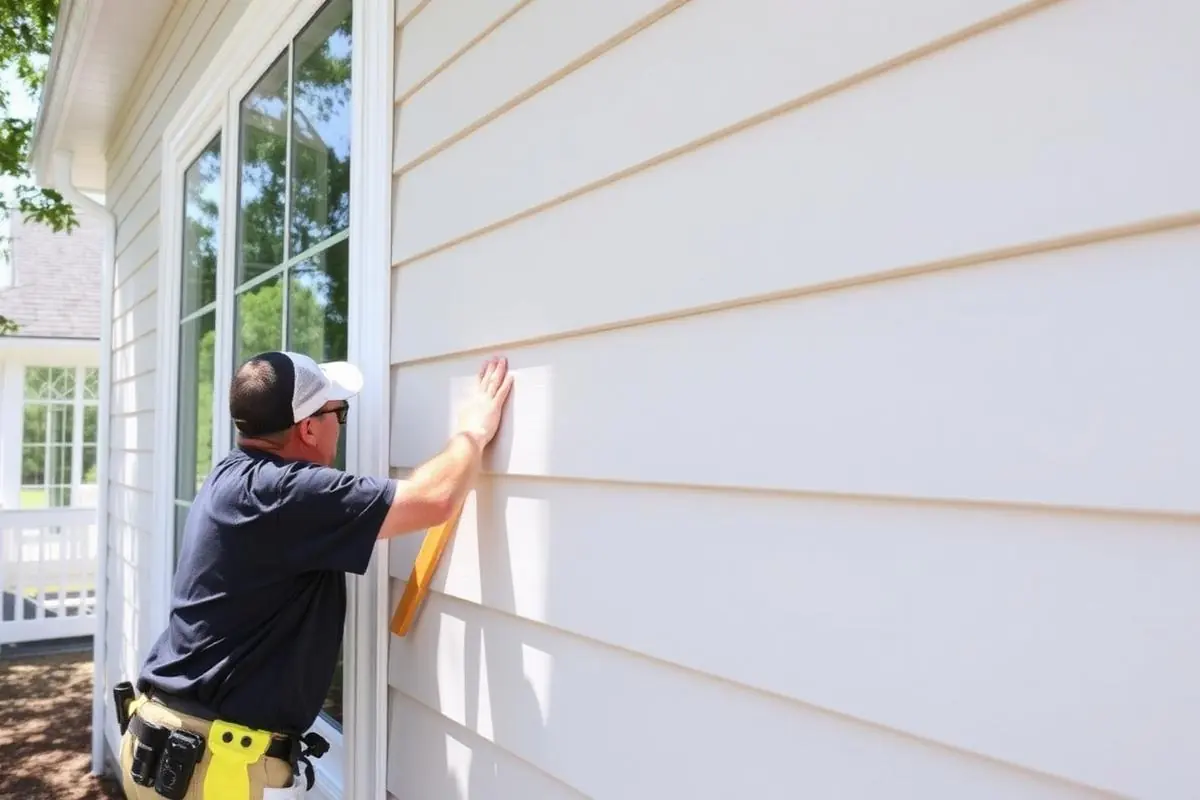
We recommend fiber cement on salt-exposed and high-wind elevations, and we'll tell you why. But vinyl is a legitimate product on the right house — a sheltered lot, a rental, a pre-sale renovation, or a budget where the real alternative is leaving failing cladding up for another five years. When vinyl is the right call, we install it properly instead of talking you into something you don't need.
Insulated or standard vinyl lap, board-and-batten, and shake profiles
Full tear-off to sheathing — we don't install over failing cladding
Taped water-resistive barrier behind the panels, not stapled housewrap
Kick-out and head flashing at every roof-to-wall and window termination
Proper nailing-hem attachment so panels can move without buckling
New J-channel, corner posts, and starter strip — never reused
By the Numbers
What vinyl costs and delivers in the Lowcountry
Typical installed range
$5 – $9 per sq ft of wall
Whole-home replacement
$11,000 – $24,000 depending on size and stories
Service life on the coast
15 – 25 years; sun-facing walls age first
Maintenance
Annual wash; never needs painting
Typical schedule
5 – 10 working days for a full home
Vinyl is the lowest installed cost of the three siding materials we carry. Insulated panels sit at the top of that range. We measure the wall before we price it.
When vinyl is the right choice
A siding company that always steers you to the most expensive board isn't advising you, it's selling. Vinyl earns the job more often than the industry admits, and the conditions are specific.
On a sheltered interior lot in West Ashley, Summerville, or Goose Creek — away from direct salt aerosol and sustained coastal wind — a well-installed vinyl wall over a taped barrier with flashed terminations does its job for two decades and never asks for paint.
Sheltered interior lots away from marsh, creek, and ocean exposure
Rentals and pre-sale renovations where the payback window is short
Budgets where the alternative is leaving failing cladding up another five years
Homeowners who won't maintain a repaint cycle and want to stop thinking about it
When we'll tell you to spend more
The failure modes are predictable, so this is an easy conversation rather than an argument. Vinyl warps against reflected heat, cracks under wind-driven debris, and hangs on a nailing hem rather than fastening tight — which makes the attachment itself the weak point at coastal design wind speeds.
There's also a repair problem worth knowing up front. Vinyl fades, and a decade-old wall can't be color-matched, so one storm-damaged elevation often means re-siding that whole side of the house. If you're on an exposed elevation or holding the property twenty years, read our fiber cement comparison before you decide.
Marsh-front, tidal creek, and ocean-facing exposures
Walls facing reflected heat from roofing, hardscape, or glass
Homes you intend to hold for 20 years or more
Elevations that take sustained wind or airborne debris
The install details that decide how long it lasts
Almost every vinyl failure we're called to look at is an assembly failure, not a panel failure. Vinyl doesn't rot — but it hides everything behind it, which means a bad barrier goes unnoticed until the sheathing is soft.
Tear-off to sheathing so the envelope can actually be inspected
Water-resistive barrier lapped shingle-style and taped at seams and penetrations
Kick-out flashing at every roof-to-wall intersection — the most common omission
Head flashing over windows and doors, not sealant alone
Nails centered in the hem and left slightly loose so panels can expand in heat
Correct overlap direction and starter-strip alignment so wind-driven rain sheds outward
Insulated vinyl and what it actually buys you
Insulated panels have rigid foam bonded to the back. They cost more, add a modest thermal break, feel more solid under hand pressure, and resist the oil-canning look that makes cheap vinyl read as cheap.
We won't oversell the energy savings — the foam is a real but small improvement over an insulated wall cavity. The rigidity and appearance are the honest reasons to pay for it.
Before & After
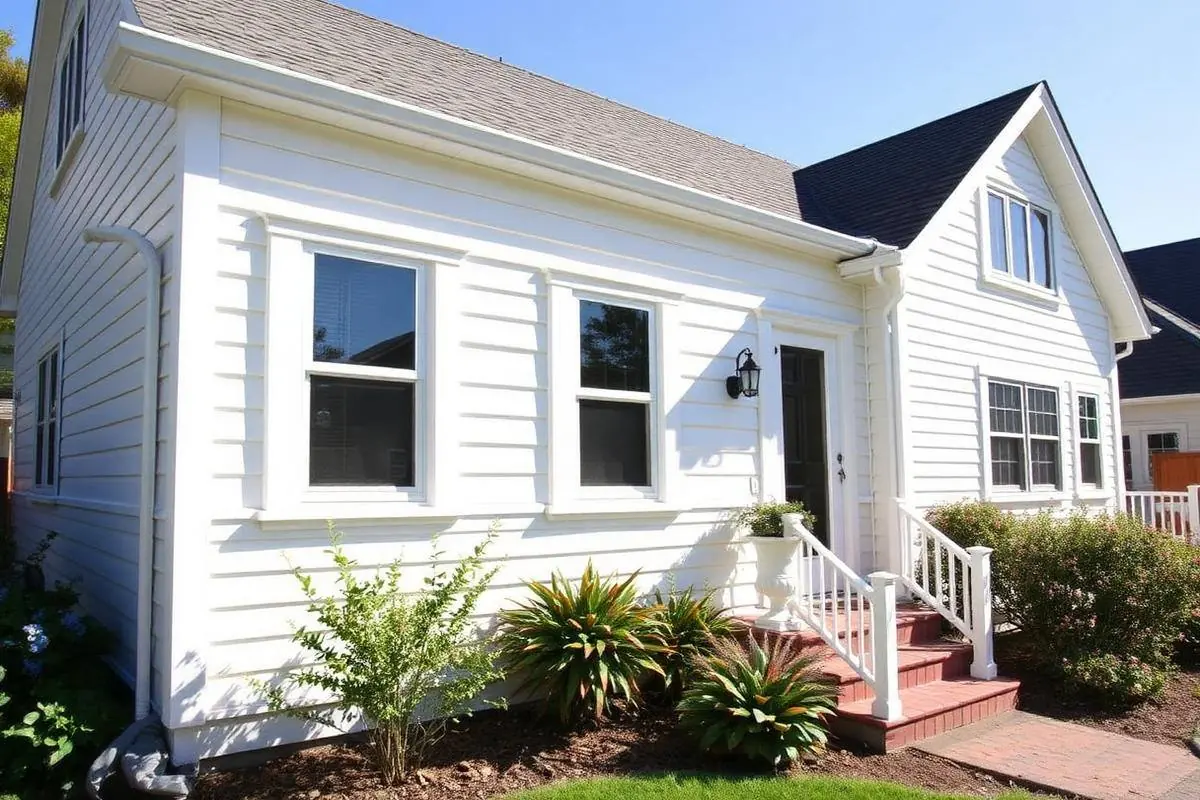
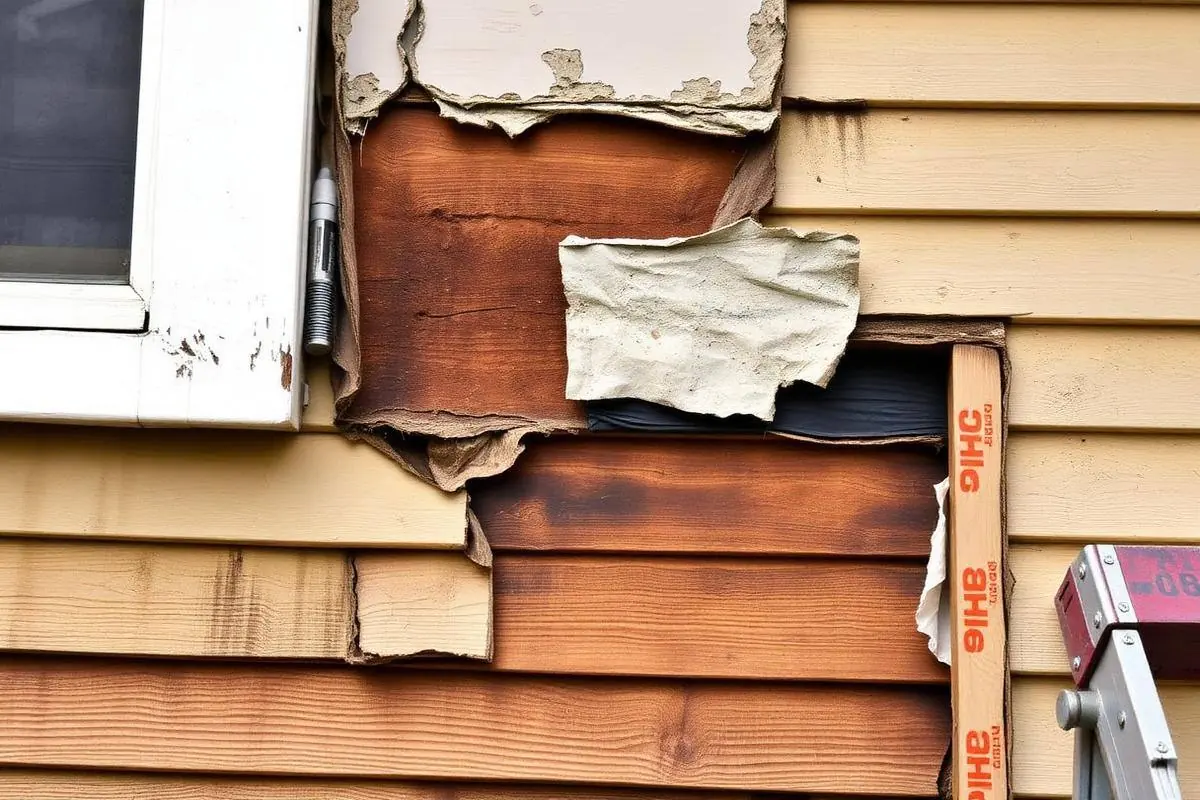
Failing cladding replaced with a properly detailed vinyl wall
BeforeAfter
Before: failing claddingAfter: new vinyl siding
Old cladding and housewrap stripped to sheathing, soft sheathing replaced at the quoted per-sheet rate, taped water-resistive barrier installed, and new panels hung on fresh starter strip and corner posts with kick-out and head flashing at every termination.
Typically $5 to $9 per square foot of wall installed, which usually means $11,000 to $24,000 for a full home. Insulated panels sit at the top of that range. Stories, access, and trim scope move the number more than the panel itself.
How long does vinyl siding last on the coast?+
Commonly 15 to 25 years here, with sun-facing and heat-reflected elevations aging first. It usually looks tired before it fails — chalking and fade arrive well before panels stop shedding water.
Is vinyl siding a bad choice in Charleston?+
Not on a sheltered lot. On marsh-front, ocean-facing, and high-wind elevations we'd steer you to fiber cement, because vinyl can unzip at design wind speeds and cracks under debris. Away from that exposure it's a sound, cost-effective wall.
Can you install vinyl over my existing siding?+
We generally won't. Layering hides the sheathing, prevents proper flashing at windows and roof-to-wall terminations, and traps whatever moisture is already in the assembly. It saves money on day one and costs far more the first time water gets behind it.
Does vinyl siding need painting?+
No. Color is integral to the panel, so it never needs paint. The tradeoff is that once it chalks and fades it can't be restored or color-matched, which is why partial repairs on an older wall rarely look right.
How long does a vinyl re-side take?+
Usually 5 to 10 working days for a typical home — faster than fiber cement because there's no field finishing and the panels are light. Tear-off, sheathing repair, barrier and flashing, then cladding and trim.
We walk the whole exterior — roof, walls, openings, drainage — and tell you what's failing, what's fine, and what it costs to fix. No pressure, no guesswork.