The short version
The decking you see is the smallest part of the decision. Framing, fasteners, and ventilation under the deck decide whether it lasts eight years or twenty-five.
Still the value option, and still perfectly viable here if it is maintained. Expect to clean and re-seal on a regular cycle, and expect some movement — boards cup and check as they dry through their first two summers.
The failure point is usually maintenance fatigue: the deck is fine at year three and neglected by year six.
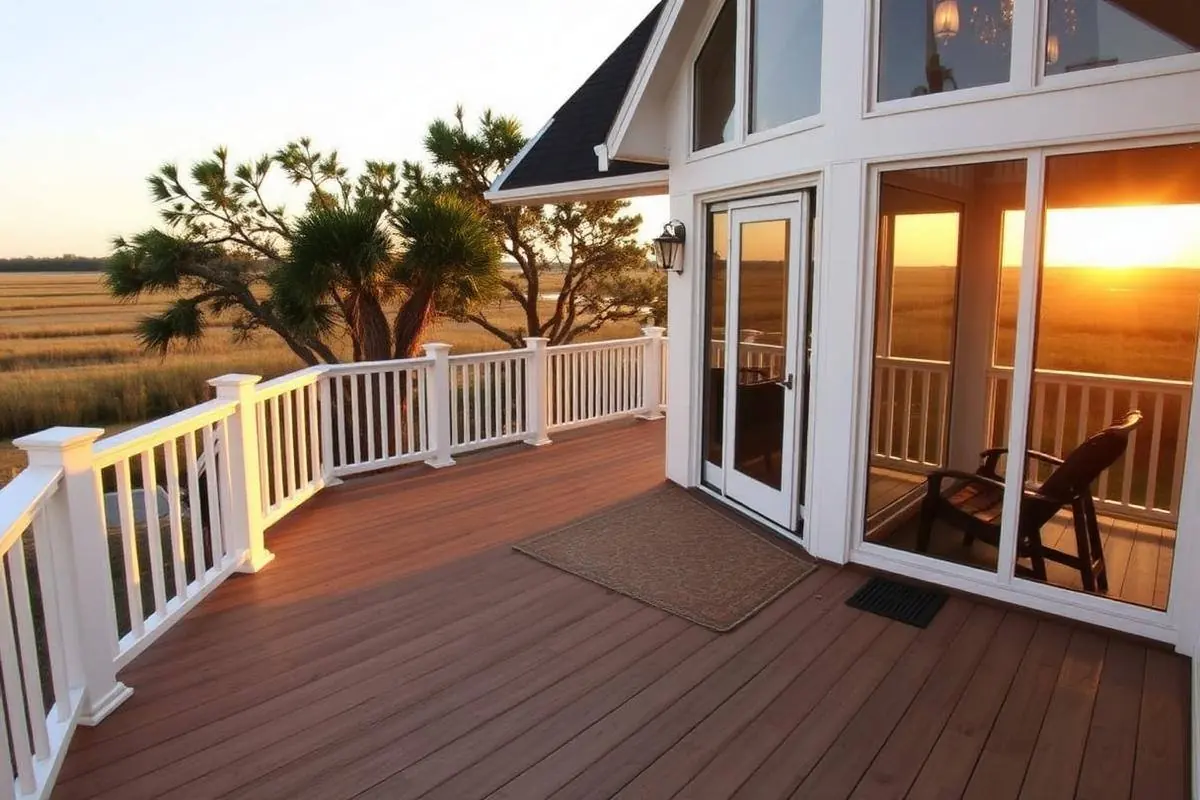
For most coastal clients this is the right answer. No re-sealing, no splintering, and no mildew feeding on the board itself. The tradeoffs are real though: dark boards get genuinely hot in full afternoon sun, and quality varies more between brands than the marketing suggests.
Choose lighter tones for unshaded decks, and confirm the warranty covers fade and stain, not just structural failure.
Ipe and similar hardwoods are dense, durable, and beautiful, and they handle sun and humidity extremely well. They also cost more, need stainless fasteners and pre-drilling, and will silver out to grey unless you oil them on a schedule. That's an aesthetic choice, not a defect.
Whatever the surface, the substructure is what fails first in this climate. Ledger flashing that dumps water behind the band board, hidden hangers that were never rated for coastal exposure, and posts set without drainage are the three problems we most often find on decks under fifteen years old.
- Properly flashed ledger, mechanically fastened to structure
- Hot-dip galvanized or stainless hardware throughout
- Ventilated framing and drainage at post bases
- Joist tape on every framing member's top edge